10/2021Understanding Now

The facial oils trend is hitting China too and has the potential to gain ground in the future

  • IndustryBEAUTY
  • AuthorSabrina Lin

Using face oil to nourish the skin is a common skin-care method originating in Japan and already popular in Western countries like France and the US. It seems to also appeal to Chinese users now as they are discovering its benefits.

This method focuses on incorporating facial oil into a skincare routine – after a cleanser and before a face cream/serum. It can be used alone, combined with a hydration mask or mixed with skincare or cosmetic products to boost hydration.

Dry and sensitive skin users highly appreciate facial oils as consumers discover they are compatible with human skin and can lock moisture into the skin. However, oily skin types are still more hesitant as they fear it might cause acne or a breakout (a preconceived idea that could disappear with time, as observed in France and the US).

An increasing number of users also seem to be changing their cleansing products to oil-based. Sensitive skin in particular favors oil cleansers over micellar water, not only for the gentle cleansing and hydration benefits, but also to avoid skin irritation from wiping cotton on their faces.

They said...

(CN) For a sensitive skin, oil makeup remover is the best product. It can quickly clean makeup without needing extra tool. The skin barrier will not be damaged by consistent rubbing, that’s the point! (Xiaohongshu)
(CN) I’ve used this oil makeup remover for five years and this has been my holy grail. I am dry and sensitive prone skin, and I don’t like micellar water for the rubbing process can damage and make stratum corneum become thinner. (Xiaohongshu)
(CN) How to use facial oil?, generally, three drops per time are enough for skin type. After your tonic water, put a few drops on your hand, rub it with all your hands, press lightly, and just apply a thin layer. You can not only use it as massage oil, but also to mix it with face cream, or foundation to increase the moisturisation of the product. Of course, you can also add it into a facial mask to build up skin barrier protection. (Sohhu)
Discover more Insights

  • Functional drinks
    • 06/2026
    • FMCG

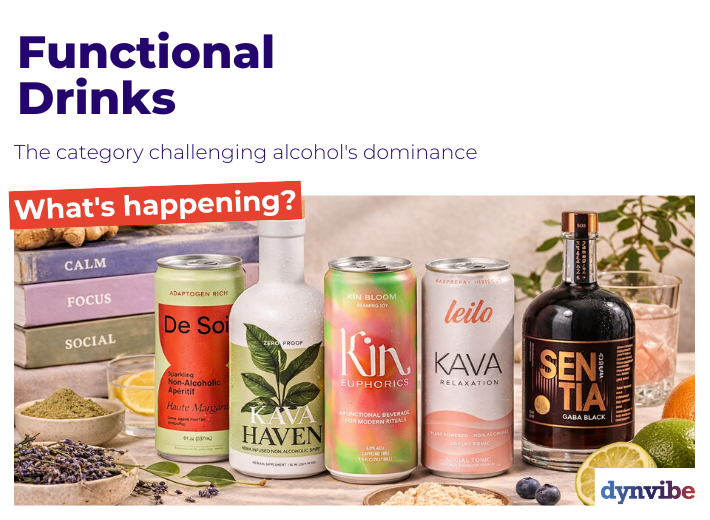
    Functional drinks

    What happens when functional drinks start challenging alcohol’s long-standing dominance?
    For decades, alcohol owned social occasions by fulfilling needs for relaxation, connection, and social ease. Today, these needs are still here, but consumers want to experience them differently: with more control, well-being, and reassurance.
    Driven by strong search growth in the US, functional drinks are emerging as a category of their own. They promise benefits once associated with alcohol, relaxation, calmness, stress relief and social confidence but without relying on alcohol.
    Adaptogens, kava, L-theanine, GABA, CBD/THC, and botanicals are becoming new proof points. Ingredients are no longer just part of the formula: they reassure consumers, build legitimacy, and shape brand positioning.
    This shift is attracting a wide range of profiles, from wellness seekers and sober-curious drinkers to mainstream social drinkers looking for greater balance and control.
    At Dynvibe, we dove into online conversations to understand how functional beverages are reshaping consumption occasions, consumer expectations, and new opportunities for beverage brands.
    If you operate in the beverage space and want to understand the signals already challenging alcohol’s dominance, you’re in the right place.

  • From formula-led to delivery-driven
    • 05/2026
    • Beauty

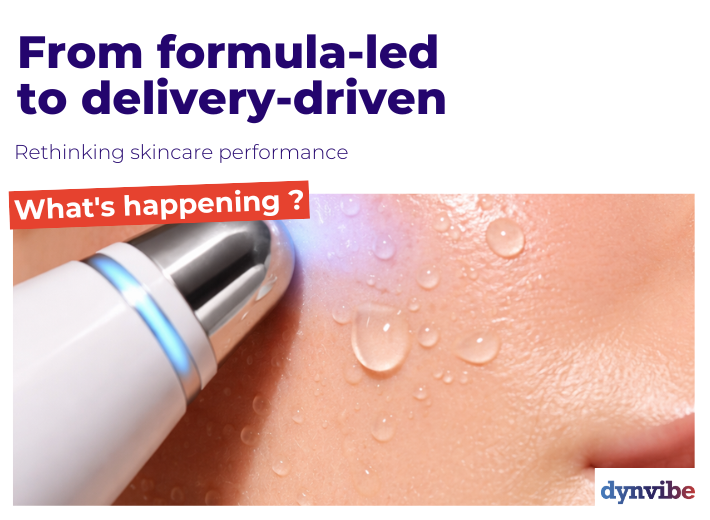
    From formula-led to delivery-driven

    What happens when skincare performance is no longer defined solely by the formula, but by how it actually acts on the skin? A new paradigm is emerging.
    Today, consumers are looking beyond ingredient lists. They explore, test, combine and gradually redefine what “efficacy” really means.
    Between new techniques, technologies, and increasingly sophisticated routines, skincare is becoming a space of experimentation where every detail matters.
    In this context, new signals are gaining importance. From usage to sensorial cues to tools, everything seems to contribute to a different reading of performance. This shift points to something deeper: a transformation in how consumers perceive, evaluate, and validate results.
    At Dynvibe, we’ve dived into online conversations to decode this evolution and uncover the new benchmarks taking shape.
    If you’re in the beauty space and looking to spot these emerging signals before they become standards, you’re in the right place.